
Beyond The Blue Line
Bringing My Vision to Life: From Concept to Screen
Inspiration & Conception
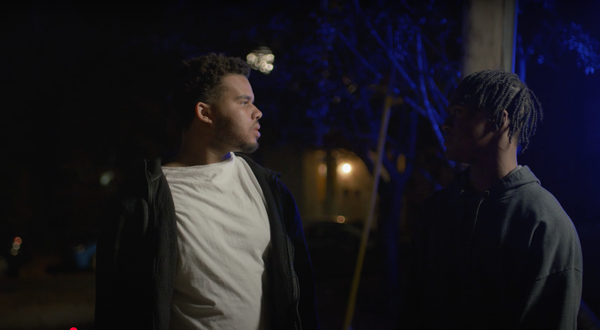
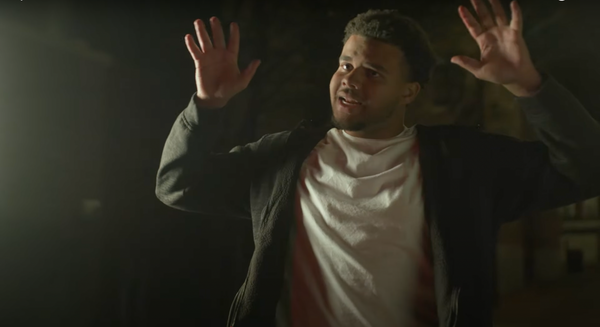
Following a tragic act of police brutality, Beyond the Blue Line explores the intertwined lives of Jamal's grief-stricken brother, Marcus, determined to seek justice, and a conflicted officer tormented by the haunting aftermath of his actions.
As the writer, director, and executive producer, I wanted to craft a narrative that confronted the painful cycle of violence and systemic injustice faced by marginalized communities. I was inspired to create this film for my senior thesis capstone project, but it became more than just a story—it was the start of a conversation. The idea came to me during a moment of reflection and heartbreak as I watched the tragic death of George Floyd on the news, along with so many others. I was profoundly impacted by the injustice, the recurring cycle of violence, and the lack of accountability that seemed to persist. I wanted to create a story that didn’t just depict loss and grief but also challenged viewers to reflect on the systemic issues that perpetuate these tragedies. This story is not only timely, but deeply personal, and I believe it has the power to spark conversations and bring about change.


Development & Pre-Production
Crafting the Script
I crafted the script to balance both characters’ emotional arcs while maintaining the integrity of the message. Marcus’s journey reflects the pain of losing his brother and his fight for justice, while Officer Kane’s perspective serves as a haunting reminder of the consequences of his actions. Through dream sequences and flashbacks, the narrative jumps between perspectives, revealing the events leading up to the incident and its aftermath. I made the decision to tell the story through a dual perspective—not to validate the officer's actions but to symbolize the cycle of violence and the urgent need for change. By showing the emotional aftermath from both Marcus and Officer Kane’s viewpoints, my intention was to hold a mirror to society, prompting audiences to confront uncomfortable truths about systemic injustice that are often avoided.
To achieve this complexity, I went through multiple rewrites, ensuring the story was nuanced and impactful. I also intentionally left the ending open to interpretation, encouraging viewers to engage in deeper reflection. The final sequence intertwines both fates: Marcus finding resolve at his brother’s grave while Kane spirals into despair. As Kane raises the gun, Jamal’s ghostly figure appears, mirroring his actions and symbolizing the cycle of violence. I wanted audiences to reflect on the consequences of the officer's actions and the urgent need for accountability and change in cases of police brutality.
Storyboarding & Shot Lists
In Beyond the Blue Line, I used visual contrast to deepen the emotional journey of both characters. For Marcus, I chose muted blues and grays with soft, natural lighting to reflect his grief, isolation, and longing for closure. In contrast, Officer Kane’s world is portrayed with harsh shadows and stark contrasts to represent his guilt, paranoia, and moral conflict. By juxtaposing the worlds of Marcus and Officer Kane, I aimed to visually represent their internal struggles and opposing perspectives.

Execution & Visuals


Symbolism & Sound Design
Through visual and auditory storytelling, Beyond the Blue Line is designed to be felt as much as it is seen. The shattered phone in the alleyway represents Jamal’s silenced voice and the tragic miscommunication that led to his death. Officer Kane’s guilt manifests through haunted visions—waking from a flashback, he sees Jamal’s bloodied reflection in the mirror, a stark reminder of the guilt consuming him. Meanwhile, Marcus’s grief isolates him, leading to a surreal dream sequence that mirrors his fractured psyche, where he confronts Kane, demanding answers and holding him accountable for the systemic bias ingrained in the justice system. These moments blur the line between reality and memory, forcing both Marcus and Officer Kane to confront the painful truths within themselves.
Sound design enhances these emotions. Silence and subtle auditory callbacks-like Jamal’s voice echoing in Marcus’s mind, amplify his grief, while intrusive noise surrounding Officer Kane symbolizes his paranoia and guilt.


Challenges & Solutions
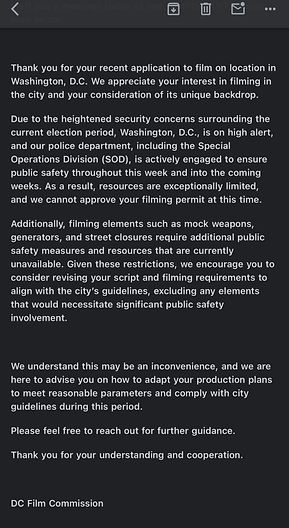
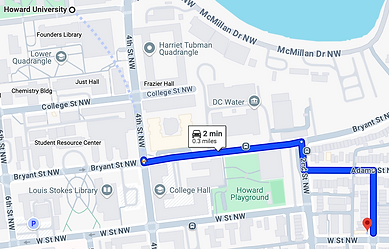
Beyond the Blue Line was a passion project that almost didn’t happen. Just five days before our shoot date, I was on the brink of scrapping the entire project because I hadn’t found my main actor for Marcus. On top of that, heightened security around the election, due to Kamala Harris being on campus, meant we couldn’t get a permit for one of our crucial locations. Filming near campus with a fake weapon was risky, and many suggested changing the script or pushing back my shoot date. Despite the mounting pressure, I was determined to see my vision through. I refused to compromise the story and persisted, ultimately finding the right actor just in time. We also managed to film at the original location, navigating the restrictions with strategic planning and communication. These challenges tested my perseverance and adaptability, teaching me the importance of creative problem-solving in filmmaking because what is filmmaking without its challenges? This experience reaffirmed my commitment to telling this powerful story, no matter the obstacles.



Bringing Beyond the Blue Line to life was truly a team effort. From pre-production meetings to on-set problem-solving, I prioritized clear communication and ensured every crew member knew exactly what was expected of them. I made sure everyone understood their roles and responsibilities, which helped the production run smoothly and efficiently. By fostering a collaborative environment where every voice was heard, we maintained a positive atmosphere, even under pressure, which contributed to the film’s amazing outcome.
Final Points
Beyond the Blue Line is a film that forces us to sit in discomfort, reflect on accountability, and question the systems we uphold. Through its characters and narrative, the film pushes boundaries and invites difficult but necessary conversations about societal norms and systemic injustices.
In making this film, I aimed to create something that wasn't just visually compelling, but thought-provoking. The process itself was one of self-discovery and growth—both as a filmmaker and as a storyteller. Every obstacle faced during production—whether it was casting, location issues, or navigating complex emotional themes—reinforced my belief that stories like this need to be told, even when the path is difficult.
I’m proud to share that Beyond the Blue Line has already been officially selected and received its first nomination for Best Student Female Director at the Los Angeles International Indie Short Film Festival. This is a great honor and a testament to the film's impact. I look forward to continuing its journey on the festival circuit, hoping to connect with more audiences and keep the conversation around its powerful themes alive. This is only the beginning!


